
A hospital bed purchase is rarely only a product decision. For a distributor, importer or healthcare project, it also affects supplier reliability, documentation, maintenance, spare parts, packaging, delivery planning and the confidence of the end customer.
The most useful buying process begins with a written requirement. This guide explains the questions that should be answered before comparing models or requesting a quotation.
1. Define the application before choosing a model
Begin with the environment in which the bed will be used. A product intended for a general hospital ward may have different priorities from a bed used in advanced care, long-term care, rehabilitation or a home-care setting.
- Who will use the bed?
- Where will it be installed?
- Who will operate and maintain it?
- Which market or project requirements apply?
- What accessories are required?
- Is OEM or private label support needed?
Distributors should also consider the needs of their downstream customers. A hospital project may prioritize documentation and configuration consistency, while a long-term care provider may focus more heavily on daily operation, caregiver workflow and maintenance.
2. Match the care setting to the right bed category
Once the application is clear, shortlist the appropriate category instead of comparing every available model.
| Category | Typical evaluation focus | Useful next step |
|---|---|---|
| Electric hospital beds | Powered adjustments, caregiver workflow, control method, electrical requirements and maintenance support. | Review hospital bed solutions |
| Manual hospital beds | Required adjustments, operating effort, durability, maintenance and project budget. | Compare hospital bed categories |
| ICU and advanced-care beds | Clinical workflow, required functions, safety priorities, emergency needs and documentation. | Review advanced bed solutions |
| Home-care and nursing beds | Care environment, comfort, caregiver access, mobility, low-position needs and long-term use. | Review home-care solutions |
3. Build a product requirement sheet
A clear requirement sheet makes supplier comparisons more accurate. It also reduces repeated clarification before quotation.
Operating method and functions
Confirm whether the project requires electric, semi-electric or manual operation. List the required adjustments and how caregivers or patients are expected to control them. Avoid using general descriptions such as “standard hospital bed” when the actual functions are important.
Dimensions and load requirements
Specify required platform dimensions, overall space limitations, mattress compatibility and required load information. These values should be confirmed for the selected model rather than assumed from a category name.
Safety and mobility
Define expectations for side rails, head and foot boards, casters, brakes, mobility, safe operation and any application-specific safety features. Evaluate how these components support both patient safety and caregiver workflow.
Accessories and room furniture
A project may also require mattresses, bedside cabinets, overbed tables, IV poles or other ward furniture. Reviewing these items together can improve configuration consistency and simplify quotation, packing and project coordination.
Documentation and market requirements
Tell the supplier which market the products will enter and which documents or certificates must be reviewed. Requirements vary by country and project. Available documentation should be confirmed before order approval.
4. Evaluate patient, caregiver and hospital workflow
Product evaluation should include daily use, not only technical features. Consider how the bed will be positioned, cleaned, moved, operated and maintained throughout its lifecycle.
- Can caregivers access the patient and controls efficiently?
- Are braking and movement procedures clear?
- Can surfaces and components be cleaned as required by the facility?
- Are commonly serviced parts accessible?
- Are operating instructions and technical documents available for review?
- Can the supplier explain maintenance and spare-parts support?
These questions help buyers evaluate operational value instead of relying only on a feature list.
5. Review supplier capability through evidence
A supplier evaluation should show how consistency is managed from production to shipment. Ask for relevant evidence rather than accepting broad claims such as “high quality.”
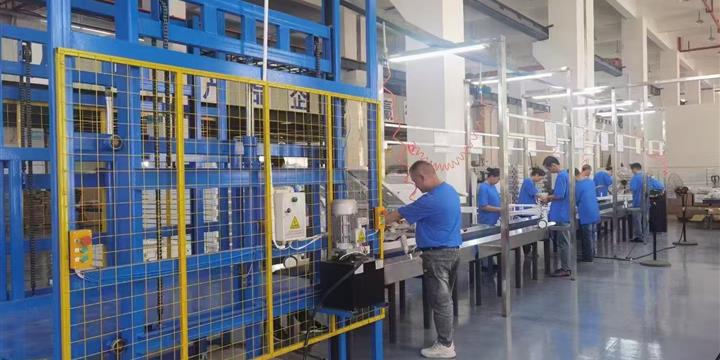
Factory, production, inspection, product detail, packaging and loading images should support the supplier's explanation of manufacturing and quality control.
A manufacturing review may cover raw-material inspection, cutting, welding, surface treatment, assembly, electrical testing when applicable, quality inspection, cleaning, packaging and shipment preparation. The objective is to understand how quality and batch consistency are controlled.
For long-term cooperation, also evaluate communication, document control, product updates, after-sales support and the supplier's ability to respond when a problem requires investigation.
6. Compare lifecycle value, not unit price alone
The lowest initial price does not always create the lowest total cost. Buyers should review factors that affect the product after delivery:
- Maintenance requirements and service access
- Availability of operating and technical documentation
- Spare-parts communication and after-sales process
- Packaging and product protection during international shipping
- Consistency between samples and production batches
- Time required for supplier communication and problem resolution
This lifecycle view is especially important for distributors who will support products in their own market.
7. Define OEM and private-label requirements early
OEM cooperation is more than adding a logo. Depending on confirmed project requirements and technical feasibility, the discussion may include logo, nameplate, color, packaging, instruction manual, labels, carton printing, product configuration and accessory combinations.
Share your target market and brand requirements before quotation. The supplier can then review the customization scope and identify which items need technical confirmation. MOQ, lead time, certification and engineering changes should be confirmed for the specific project rather than assumed.
8. Prepare the information required for a qualified RFQ
A useful RFQ helps the supplier recommend the right category and prepare a more relevant response. Include:
- Target market or destination country
- Customer type and end user
- Care environment and application
- Preferred model or product category
- Required quantity
- Required functions and accessories
- OEM or private-label requirements
- Required documents or certificates
- Destination port
- Expected project schedule
If some information is still unknown, state that clearly. A supplier should identify the points that require confirmation instead of making assumptions.
How SHLION supports B2B buyers
SHLION is a B2B manufacturer of hospital beds, healthcare furniture and hospital room solutions for distributors, importers, healthcare projects and OEM partners. The team uses the buyer's market, application and project requirements to support product selection and cooperation discussions.
Exact specifications, available certificates, customization scope, commercial terms and project schedule are confirmed during the project review.
Frequently asked questions
Should a buyer choose an electric or manual hospital bed?
The decision should follow the care environment, required adjustments, caregiver workflow, power availability, maintenance plan and project budget. Neither operating method is automatically suitable for every application.
What information is needed before requesting a quotation?
Provide the target market, customer type, application, preferred category, quantity, required functions, accessories, OEM needs, document requirements, destination port and project schedule.
Can hospital beds and room furniture be sourced together?
Yes, a hospital room requirement may combine beds, mattresses, bedside cabinets, overbed tables, IV poles and related accessories. Exact product combinations should be confirmed for the project.
Can OEM or private-label cooperation be supported?
OEM discussions may include branding, color, packaging, labels, manuals, configuration and accessory combinations. Final availability depends on the confirmed requirements and technical feasibility.
Which certificates are required for hospital beds?
Requirements vary by destination market, product and project. Buyers should state the documents required for their market, and the supplier should confirm available documentation before order approval.
How should buyers compare hospital bed suppliers?
Compare manufacturing evidence, quality-control logic, product documentation, communication, packaging, maintenance support, OEM capability and long-term service—not only unit price.
Prepare Your Hospital Bed Requirement
Share the application, target market, quantity, required functions, accessories and OEM needs so the SHLION team can review the project.
Send Your Requirements