
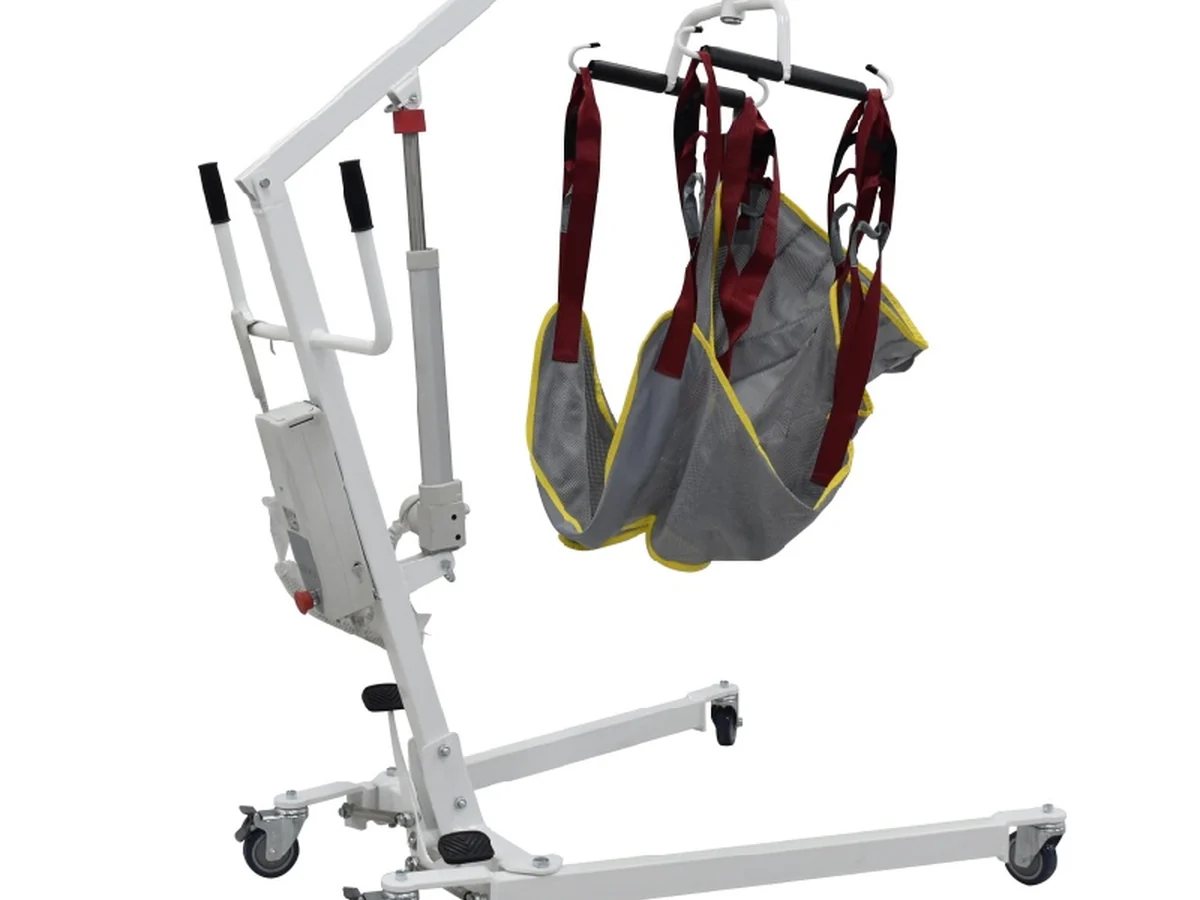
A mobile patient hoist can support transfers between a bed, wheelchair, chair or other care location. For a distributor or healthcare project, however, the buying decision involves more than selecting an electric model and asking for a price. The equipment must fit the transfer route, patient population, caregiver workflow, building layout and maintenance plan.
This guide provides a procurement framework rather than clinical operating instructions. Actual patient assessment, sling selection and transfer procedures should be completed by qualified personnel using the instructions for the exact hoist and sling combination.
1. Define the transfer scenario first
Start with the work the hoist is expected to perform. A model that moves easily in an open demonstration area may be unsuitable beside a low bed, through a narrow doorway or inside a small bathroom.
- Bed-to-wheelchair transfers
- Chair or commode transfers
- Possible floor-level recovery needs
- Hospital, nursing home or home-care setting
- Door width and turning space
- Available clearance below beds
- Caregiver staffing and training
- Frequency of daily transfers
Record the actual route and measure the narrowest points. Confirm the receiving equipment as well: bed height, chair dimensions and wheelchair access can affect the suitability of the complete transfer process.
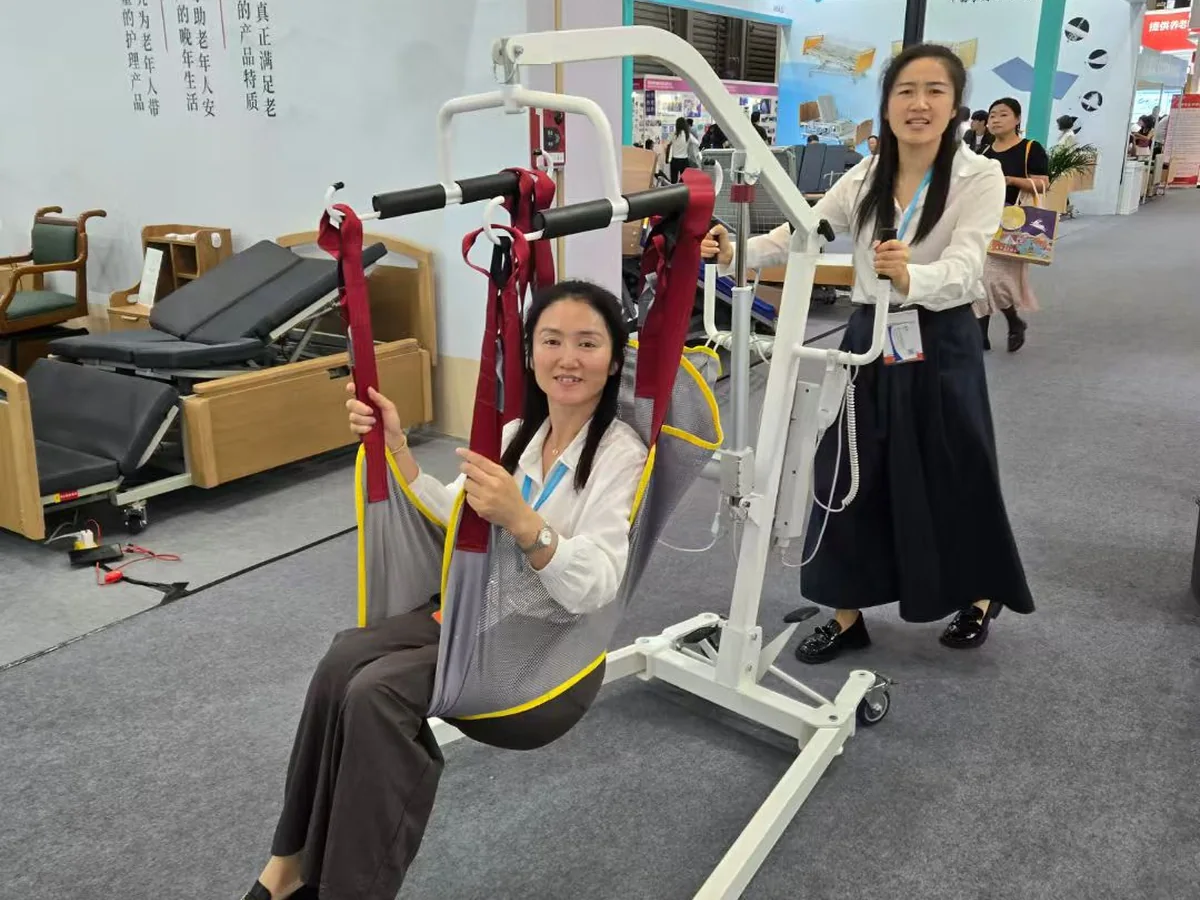
A practical demonstration helps buyers review sling attachment, lifting control, base movement and maneuverability before approving a configuration.
2. Confirm the safe working load and user range
Compare the rated safe working load of both the hoist and the selected sling with the intended user range. Do not assume that a larger number solves every selection problem. Body shape, posture, medical condition, support needs and the transfer task can all affect sling and equipment suitability.
The current SL-K11 Mobile Patient Hoist specification lists a 150 kg safe working load. Buyers should confirm that the ordered configuration and selected sling are appropriate for the intended users and project before quotation and use.
3. Check lifting range and transfer geometry
Lifting range should be reviewed together with reach, boom position, sling length and the heights of beds and chairs. A stated minimum and maximum height is useful, but it does not by itself confirm every transfer task.
| Question | Why it matters | Evidence to request |
|---|---|---|
| Can the base fit below the intended beds? | Insufficient clearance can prevent correct positioning. | Base dimensions, under-bed clearance and a site measurement. |
| Does the lift reach the required seat and bed heights? | The sling must be raised and lowered through the needed transfer range. | Lifting range and a demonstration with comparable equipment. |
| Is floor-level lifting required? | Not every configuration or sling is suitable for this task. | Manufacturer confirmation and task-specific instructions. |
| Can the unit turn in the available space? | Overall size and wheel position affect maneuverability. | Overall dimensions and a route trial where possible. |
As a real product example, the SL-K11 page lists overall dimensions of 1200 × 570 × 1230 mm and a lifting range of 755–1730 mm ±20 mm. These figures should be checked against the actual care environment rather than treated as universal approval for every transfer.
4. Match the sling, spreader bar and attachment system
The sling is a functional part of the transfer system, not a generic accessory. Selection can depend on transfer task, patient size and weight, medical condition, pressure sensitivity, required back or head support, attachment style and the position considered appropriate by the clinical team.
- Confirm that the sling is approved for the specific hoist and spreader bar.
- Confirm the correct sling type and size for the intended user.
- Match loop or clip attachments to the hanger-bar design.
- Check every strap, seam, loop and attachment point before use.
- Request cleaning, inspection and replacement instructions.
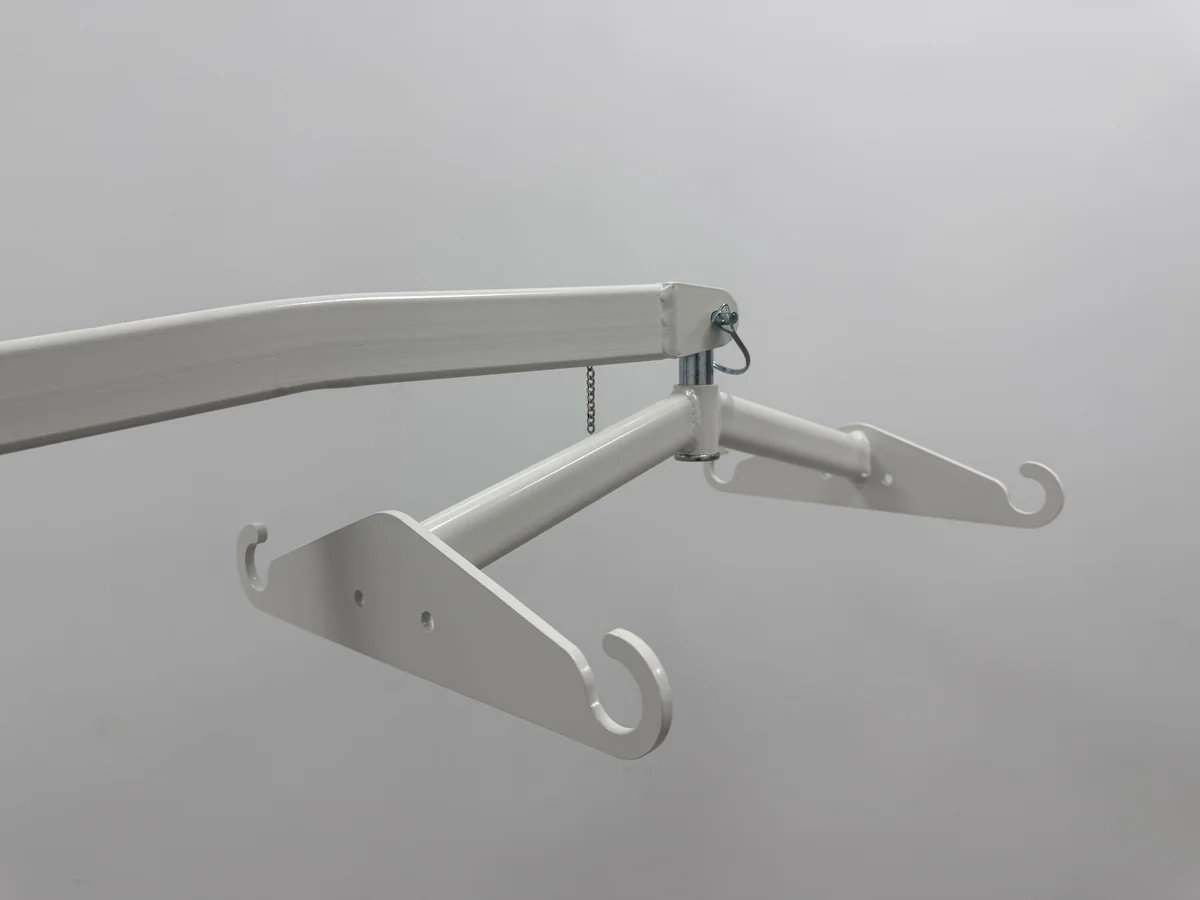
Ask how the selected sling attaches to the spreader bar and how users verify that every connection is secure before lifting.
5. Review powered lifting and emergency controls
Powered lifting should be predictable and easy for trained caregivers to control. The buyer should identify the normal controls, emergency stop, emergency-lowering method, battery status indication and procedure for a power interruption.
The current SL-K11 specification states electric lifting at 3–8 mm/s. For an actual order, confirm the control system, electrical configuration, voltage, plug, charging arrangement and operating instructions supplied with the ordered unit.
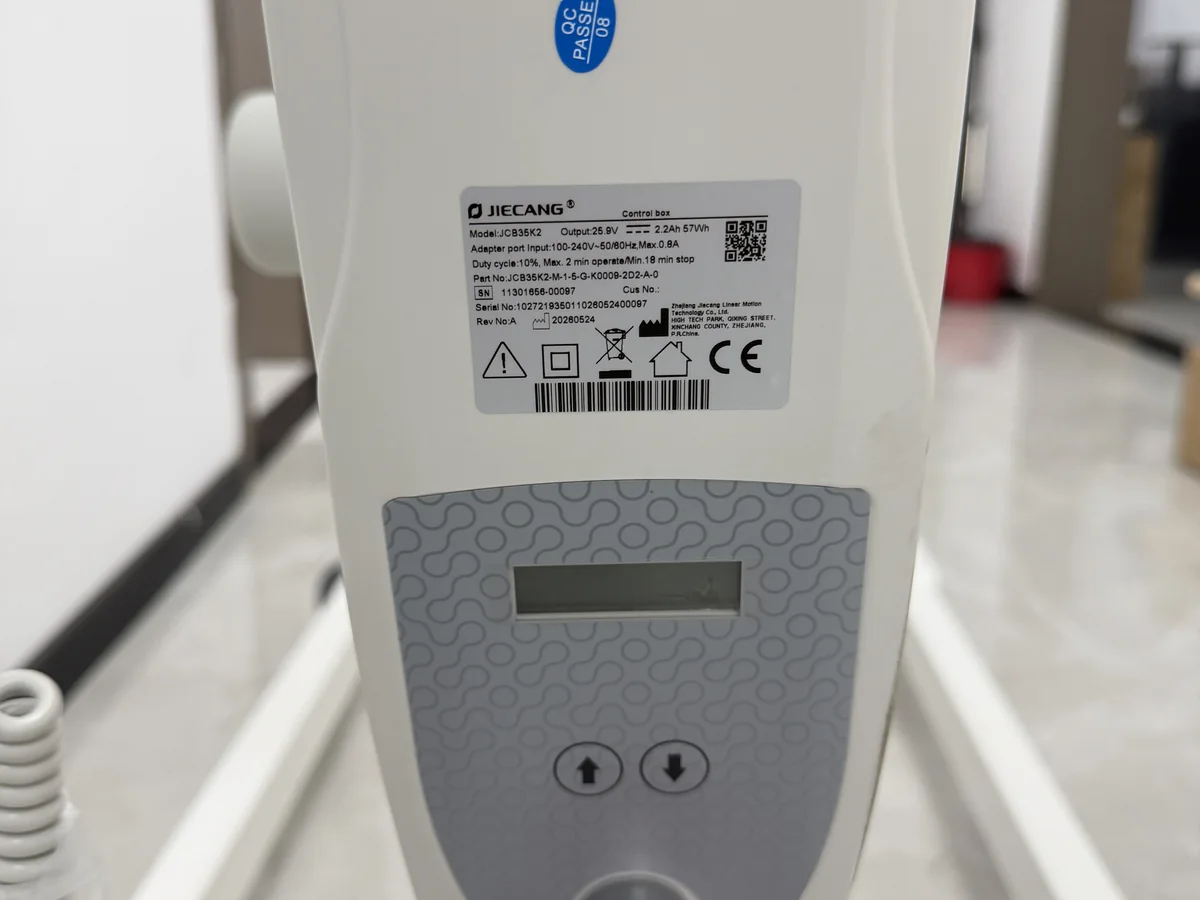
Identify normal controls and the emergency procedure during staff training.
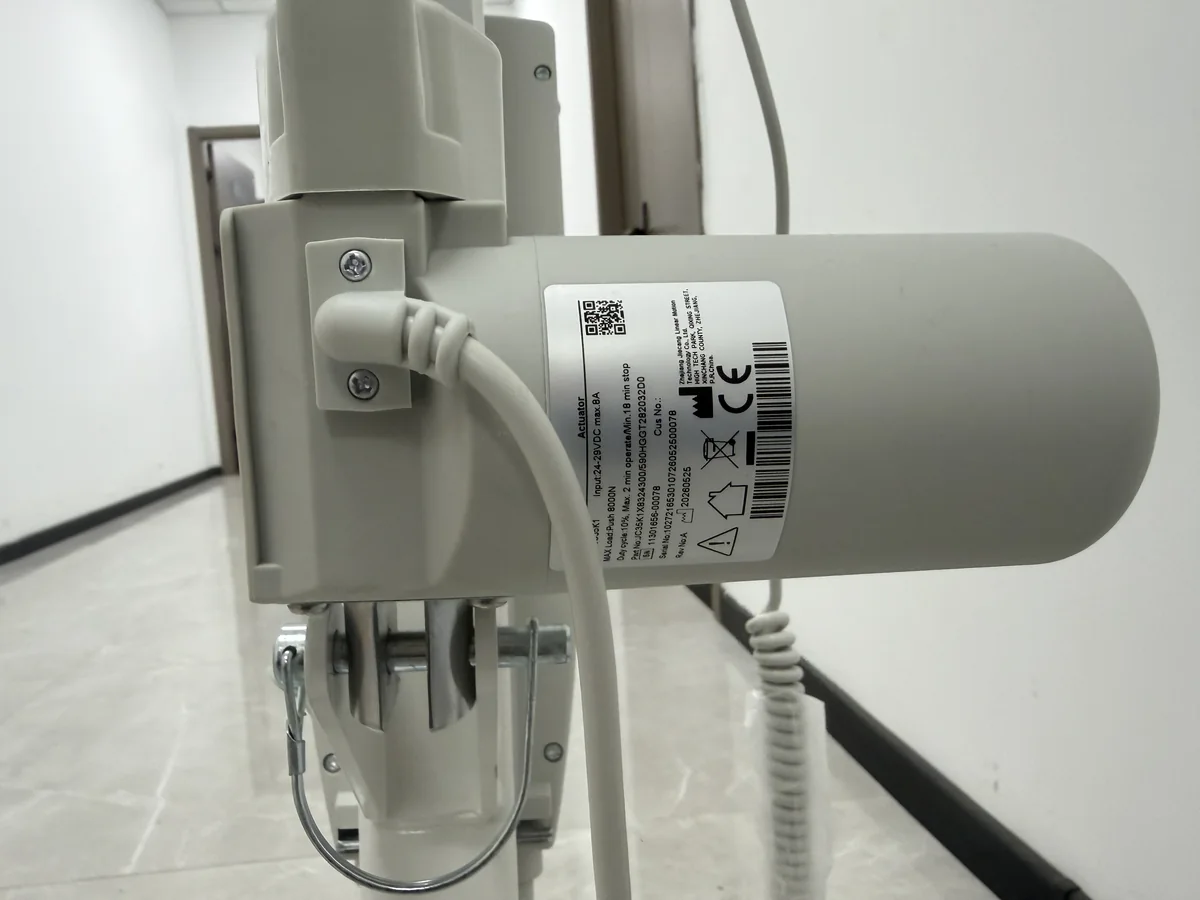
Confirm inspection points, service access and replacement-part support.
6. Evaluate the base, casters and maneuverability
The base supports stability and determines how the hoist approaches beds and chairs. Review the base-opening mechanism, width in relevant positions, wheel arrangement, brake locations, floor conditions and the force required to maneuver the unit.
- Measure under-bed clearance and access around the receiving chair.
- Check how the base is opened and closed.
- Review caster movement on the floors used at the site.
- Identify which receiving-device wheels must be locked during transfer.
- Confirm maintenance and replacement information for casters.
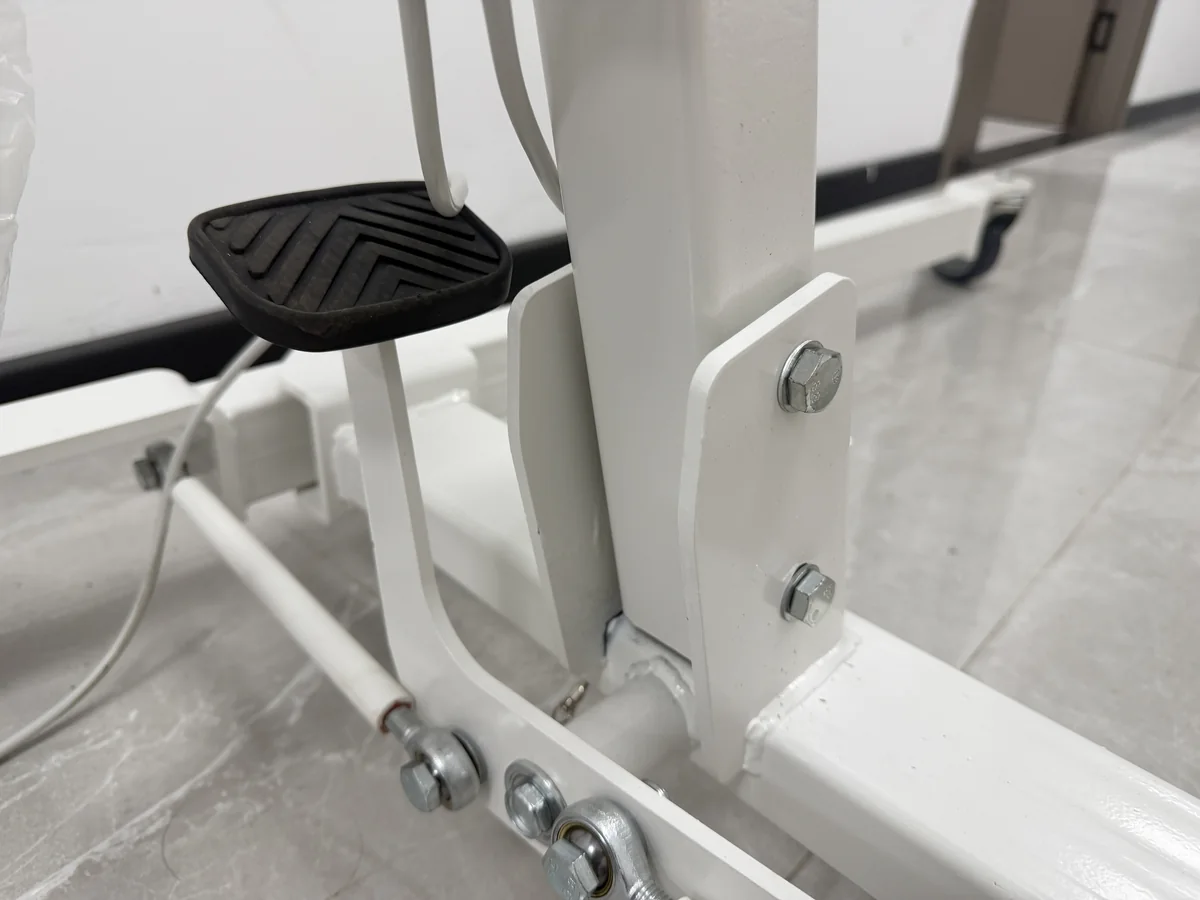
Confirm the operating method and required clearance in the real care environment.
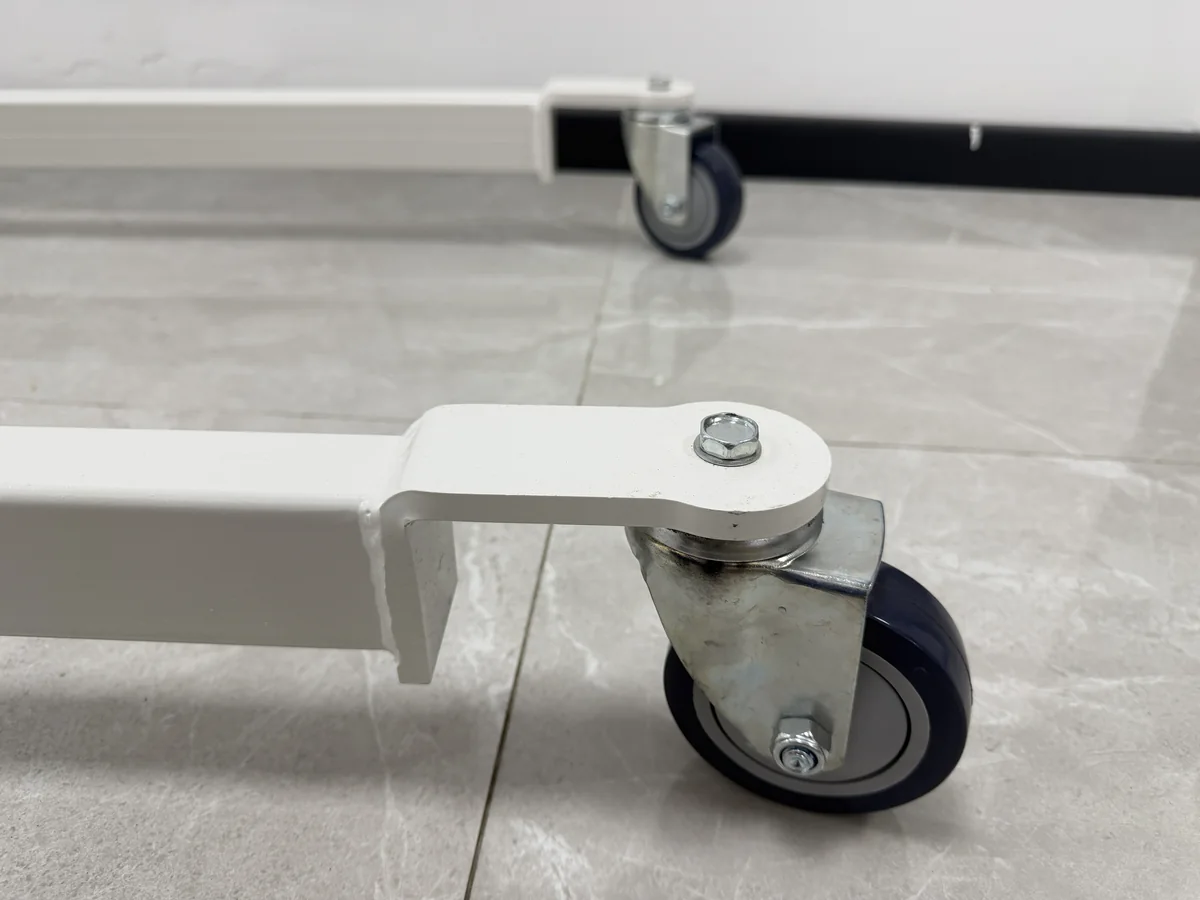
Review rolling, turning, brake access and inspection requirements.
7. Plan cleaning, inspection and maintenance
A purchasing decision should include the work required after delivery. Request separate inspection and maintenance information for the hoist and sling. Define who will perform pre-use checks, scheduled maintenance, cleaning and replacement decisions.
- Sling fabric, seams, loops and attachment points
- Spreader bar, hooks, latches and boom connections
- Fasteners, frame, base and casters
- Control handset, cables, actuator and emergency functions
- Battery condition and charging procedure
- Cleaning products and sling-laundering instructions
Worn, damaged or uncertain components should be removed from service according to the manufacturer’s instructions. Ask the supplier for a maintenance checklist and a list of project-relevant spare parts.
8. Verify supplier evidence before approval
Product selection and supplier evaluation should happen together. For the shortlisted model and configuration, request evidence that can be matched to the ordered unit.
- Technical specification sheet
- Instructions for use
- Hoist and sling compatibility information
- Inspection and maintenance guidance
- Model and configuration identification
- Market-specific documents when required
- Packing dimensions and loading data
- Warranty, parts and complaint process
For a broader supplier review, use our manufacturer evaluation checklist to examine legal identity, quality controls, traceability, packaging and long-term problem response.
9. Prepare a useful mobile patient hoist RFQ
A qualified request allows the supplier to confirm suitability and identify questions before quotation. Include:
- Destination country and intended care environment
- Expected quantity and purchasing schedule
- Transfer routes and relevant bed or chair dimensions
- Intended user weight range
- Required lifting tasks and height range
- Requested sling type, sizes and support needs
- Door width, turning space and under-bed clearance
- Voltage, plug and charging requirements
- Required documents, labels and language
- Spare parts, warranty, training and OEM requirements
Do not write “patient hoist, send best price” as the complete RFQ. A short application brief helps both buyer and supplier identify configuration risks before a sample or production order.
Frequently asked questions
Is a sling automatically included with a mobile patient hoist?
It depends on the quoted configuration. Confirm the included sling type and quantity, available sizes, attachment method and approved compatibility before ordering.
Can one sling size fit every patient?
No. Sling selection can depend on patient size and weight, medical condition, transfer task and required support. Qualified personnel should select the appropriate sling using the manufacturer’s guidance.
Can every mobile patient hoist lift a person from the floor?
No. Floor-level transfer capability depends on lifting geometry, sling, environment and manufacturer instructions. Request task-specific confirmation rather than assuming it from the product category.
What is the difference between a patient hoist and a stand-assist lift?
A sling-seat mobile hoist supports a person in a body-support sling, while a stand-assist device is intended for a different transfer method and user capability. The correct category depends on a professional assessment and the transfer task.
What should be checked before requesting a quotation?
Define the destination market, transfer route, intended user range, required sling support, lifting range, room dimensions, electrical configuration, documentation, quantity and service expectations.
Safety references
This article is a general B2B purchasing framework, not clinical, medical, legal or regulatory advice. Patient assessment, sling selection, staff training, use and maintenance must follow qualified professional guidance, the instructions for the exact equipment and applicable destination-market requirements.
Discuss an SL-K11 Patient Hoist Project
Share your transfer environment, user range, destination country, quantity, electrical requirements and required documentation so the SHLION team can review the configuration.
Send Your Requirements